
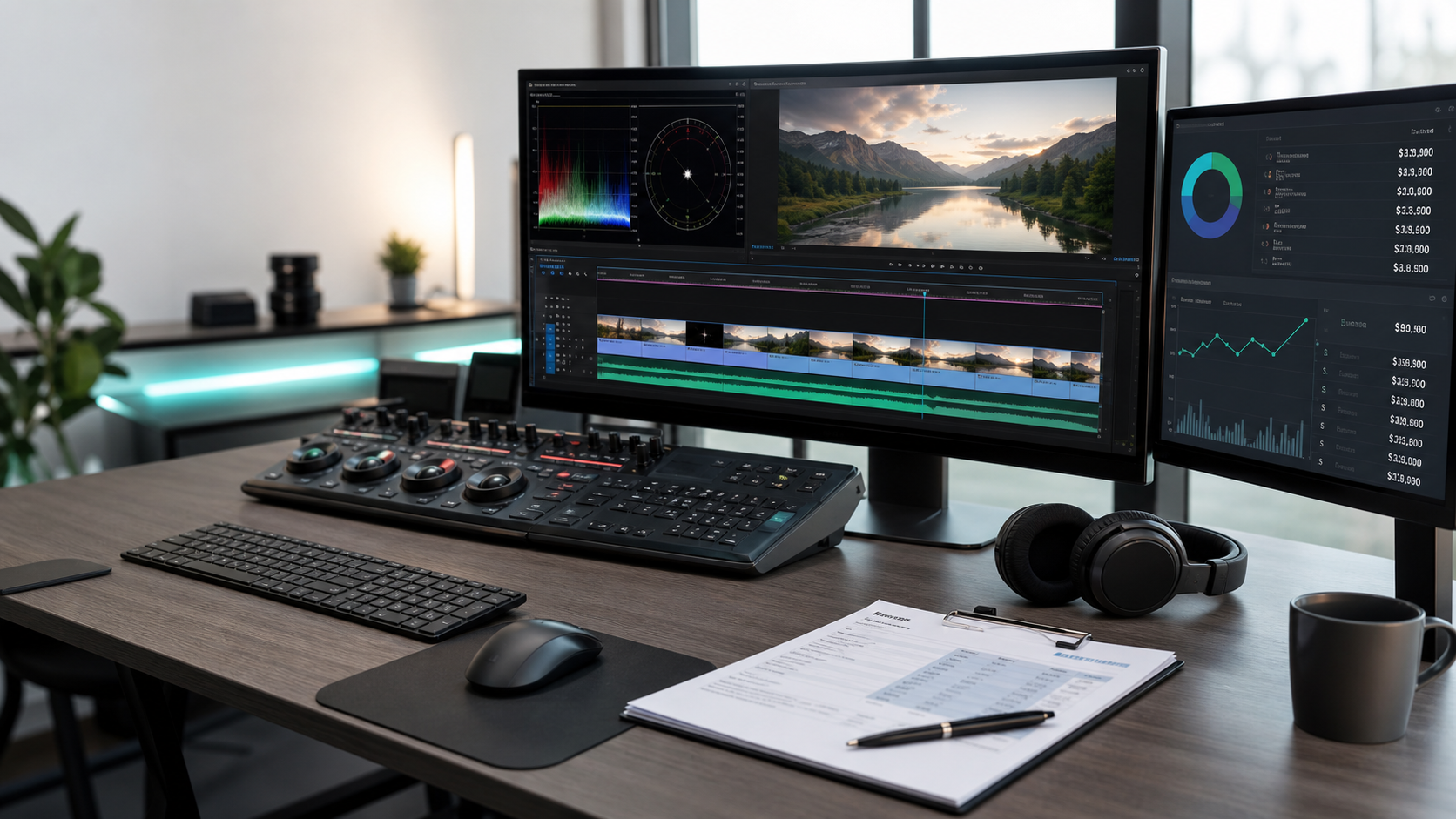
A 10-minute YouTube video can be a simple cleanup job or a full post-production project, and both scopes can be valid. The difference comes down to raw footage length, pacing, graphics, revisions, sound cleanup, turnaround time, and who is doing the work. If you’re asking how much does video editing cost in 2026, the most useful answer is that pricing depends on the kind of video you need.
For US buyers, freelance editing is usually priced below full agency support, while senior editors and specialist motion designers sit higher because their work is more technical. Agencies typically cost more because they bring project management, backup editors, QA, and repeatable workflows.
How Much Does Video Editing Cost in 2026?
Most U.S. video editing projects fall into three general buckets: simple edits, polished creator content, and higher-touch brand or corporate work. Simple clips need fewer production layers, while corporate videos, paid ads, and sales assets usually require more planning, animation, scripting, sound, and revisions.
| Project Type | Freelancer Scope | Agency Scope |
|---|---|---|
| Short-form clip, 15-60 seconds | Lower to mid-range | Mid-range to premium |
| YouTube video, 8-15 minutes | Mid-range | Mid-range to premium |
| Talking head edit | Lower to mid-range | Mid-range to premium |
| Corporate video | Mid-range to premium | Premium |
| Product ad or paid social creative | Mid-range to premium | Premium |
| Wedding highlight film | Mid-range | Mid-range to premium |
| Motion graphics add-on | Specialist add-on | Specialist or premium add-on |
Public labor and marketplace data show why quotes vary so much. Upwork’s video editor cost data separates entry-level, intermediate, and expert editors, while the US Bureau of Labor Statistics tracks film and video editing as a skilled media occupation. Client pricing also reflects software, storage, revisions, taxes, and admin time.
How Much Does Video Editing Cost by Video Type?
The fastest way to estimate your budget is to match the quote to the format. A 30-second ad with motion graphics can take longer than a 12-minute talking head video because every second carries more design, pacing, and conversion pressure.
YouTube Videos
A standard YouTube edit can range from a basic cleanup to a polished retention edit. Simple edits include trimming, jump cuts, light color correction, background music, captions, and basic exports. Higher-end edits include b-roll, sound design, custom graphics, thumbnail support, and retention-focused pacing.
If you’re building a channel, compare YouTube automation editing with YouTube vlog editing. A faceless explainer and a vlog need different pacing.
Short-Form Video, Reels, Shorts, and TikToks
Short-form editing is usually more efficient when produced in batches. The per-video investment often drops when the editor reuses the same caption style, hook format, and export settings.
For brands posting at volume, short-form video editing for Reels, Shorts, and TikToks is often priced as a monthly package.
Corporate and Brand Videos
Corporate video editing usually sits above simple creator edits because more people and brand requirements are involved. The investment rises with interview shaping, audio cleanup, branded lower thirds, b-roll, graphics, and several reviewers.
For team updates, recruiting, internal training, and brand explainers, corporate video editing is worth scoping before anyone quotes a flat rate.
Product Ads, UGC, and Sales Videos
Product ads and UGC edits often sit in a higher pricing tier than basic edits because they are tied to campaign performance. Paid ads must stop the scroll, show the offer, handle objections, and land the CTA.
Brands can compare product ads editing, UGC video editing, and VSL editing for sales videos when pricing hooks, captions, offer text, and test versions.
Freelancer vs Agency Rates: Where the Price Gap Comes From
Freelancers are usually cheaper because you’re hiring one person. Agencies cost more because you’re paying for an editing team, creative direction, account management, review systems, backup coverage, and quality control. The better choice depends on risk, volume, deadline pressure, and how much creative help you need.
| Buying Factor | Freelancer | Agency |
|---|---|---|
| Best fit | One-off edits, repeat creator content, lean budgets | Brand campaigns, content calendars, sales assets, multi-stakeholder work |
| Typical pricing style | Lower overhead, often flexible | Higher-touch, often packaged |
| Creative direction | Depends on the editor | Usually included or available |
| Revision handling | Often informal | Usually managed through a review process |
| Reliability | Can be excellent, but depends on one person | Stronger backup if someone is unavailable |
| Scaling volume | Harder past a certain workload | Better for weekly or monthly output |
A freelancer can be the right call for a creator with a clear style guide and steady footage. An agency makes more sense if you need multiple editors, graphics, ad versions, fast revisions, and someone to manage the calendar.
Cost Per Minute of Finished Video
Cost per finished minute is useful, but it can mislead buyers if used alone. In 2026, simple edits, branded videos, animated content, and commercial work all require different levels of creative planning and production time.
The better question is how many editing hours each finished minute requires. A YouTube talking head edit may take fewer editing hours per finished minute than a product ad with graphics, music cuts, sound design, and several versions.
Simple Budget Formula
- Estimate raw footage length.
- Estimate finished length.
- Decide the edit level: simple, standard, or high-touch.
- Multiply expected editing hours by the editor’s hourly or blended rate.
- Add room for revisions, especially if several people will review the edit.
Example: a 12-minute YouTube video from 60 minutes of footage will usually need more time than the final runtime suggests. Graphics, sound repair, b-roll, and rush delivery can all expand the scope.
What Changes the Final Quote?
Video editing cost changes when the editor has to make more creative decisions, fix messy source material, or deliver faster than normal. Clean footage, a clear brief, and organized assets can lower the quote.
Scope Factors That Raise Cost
- Raw footage volume: Ten hours of footage takes time to watch, label, and trim.
- Story structure: Interview edits and documentaries need narrative shaping.
- Motion graphics: Animated titles, charts, callouts, intros, and explainers add specialist time.
- Audio and color: Noise cleanup, uneven levels, and advanced grading raise the quote.
- Revisions and rush delivery: More reviewers or a 24-hour deadline usually cost more.
If your project includes animation, compare the quote against motion graphics services rather than standard editing. If the goal is to turn messy clips into polished content, professional content from raw footage is the more accurate scope.
Is Offshore Editing Cheaper and Still Good?
Offshore editing can be cheaper and still produce strong work. Many offshore editors charge lower hourly rates because their cost base is lower, not because their skill is lower. Quality depends on portfolio, communication, process, and how well the editor understands your audience.
US buyers should judge offshore teams the same way they judge local editors. Ask for samples in your niche, one paid test edit, turnaround commitments, revision rules, and file security practices. Time zone gaps help if your team sends footage at night and gets a first cut by morning.
Offshore editing works best for repeatable formats: shorts, podcast clips, talking head edits, YouTube series, real estate walkthroughs, and batch ad variations.
How to Keep Video Editing Costs Under Control
You can lower editing costs without hiring the cheapest editor. The biggest savings usually come from cleaner inputs: a clear brief, organized footage, timecoded notes, brand assets, and one revision owner.
- Send a better brief: Include the goal, platform, finished length, sample references, brand assets, export specs, and deadline.
- Batch similar videos: Editors can reuse templates, caption styles, intro treatments, and export presets.
- Limit revision rounds: Two rounds are standard for many projects. Extra rounds should be priced upfront.
Red Flags in Cheap Video Editing Quotes
A low quote is risky when the editor cannot explain what’s included. Before you accept the cheapest bid, ask about revision limits, project files, music licensing, stock footage, delivery format, and timeline.
Be careful with quotes that promise unlimited revisions, same-day delivery, complex graphics, and premium sound cleanup for one flat low price. You may pay twice: once for the cheap edit and again for a better editor to fix it.
Key Takeaways for US Buyers
- Most video editing projects are priced by format, scope, and complexity.
- Freelancers usually cost less, while agencies handle larger projects with more process and backup.
- YouTube videos can range from simple cleanup edits to higher-touch retention edits.
- Offshore editing can be a smart buy when the team has a proven portfolio and a clear workflow.
Final Thoughts
If you’re still asking how much does video editing cost after comparing rates, send the editor real project details instead of asking for a generic price. Share your footage length, finished length, reference style, deadline, and revision needs. SynergyCreations can review your brief for YouTube, short-form, corporate, UGC, product ads, wedding films, and sales videos. Start with the video editing services page or send a project note through the contact page.
Frequently Asked Questions
How much to edit a YouTube video?
A YouTube video can be priced as a simple talking head edit, a polished retention edit, or a full channel-support package. B-roll, sound design, thumbnails, and motion graphics move the project into a higher scope.
What is the cost per minute of finished video?
Cost per minute works best as a rough comparison tool. Simple editing, branded video, animation, and ad-focused work all require different levels of planning, design, review, and polish.
Why is there a freelancer vs agency price gap?
Freelancers charge for their own editing time. Agencies charge for editing plus creative direction, review systems, project management, backup coverage, QA, and specialist help. The agency price is higher because the delivery risk is lower on bigger projects.
Is offshore editing cheaper and still good?
Offshore editing is often cheaper and can be excellent. Ask for a portfolio, run a paid test edit, confirm revision rules, and check communication speed. Offshore teams work well for repeatable formats such as shorts, YouTube episodes, podcast clips, and real estate videos.
Do editors charge hourly or per project?
Both models are common. Hourly pricing works when the scope is uncertain. Project pricing works when the editor has a clear brief, raw footage length, finished length, revision limit, and delivery deadline.